 Admin
AdminKnowing how to tell when cheesecake is done is one of the most challenging—and important—skills in baking. Cheesecake is not like cake, brownies, or bread. It relies on a delicate balance of eggs, dairy proteins, fat, and gentle heat. Even one extra minute in the oven can lead to cracks, dryness, or a grainy texture, while removing it too early can result in a raw, unstable center.
Unlike most baked goods, cheesecake does not come out of the oven fully set. It continues to cook from residual heat and finishes firming as it cools. This makes traditional doneness tests unreliable unless you understand what to look for.
This in-depth guide explains how to tell when cheesecake is done baking, how to tell when cheesecake is done in the oven, and even how professionals confirm doneness without guessing. You’ll also learn visual cues, texture tests, temperature science, and expert techniques used by pastry chefs.
What “Done” Really Means in Cheesecake Baking
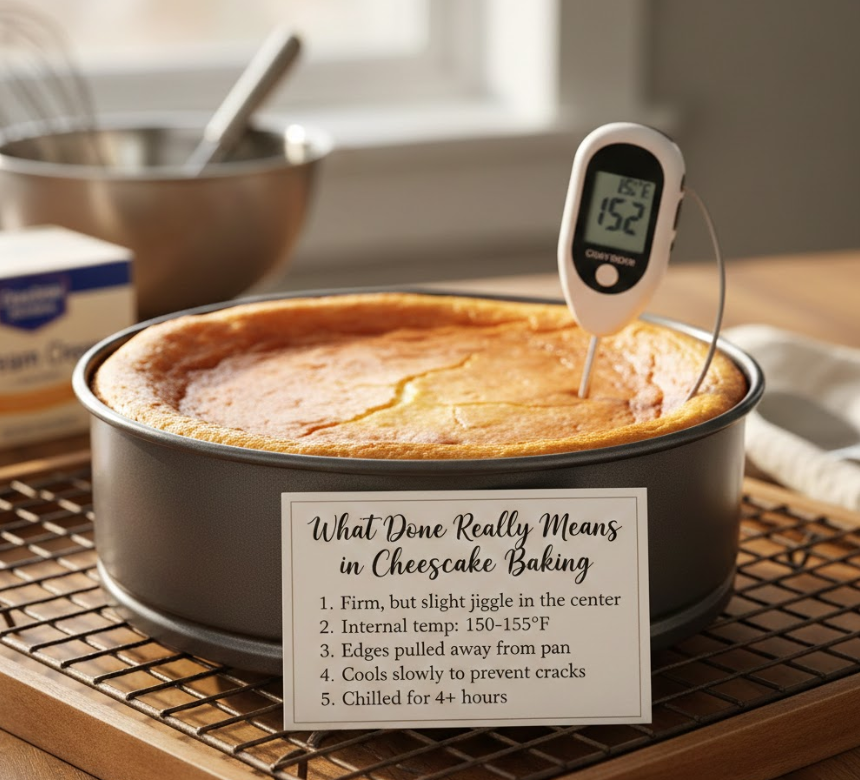
Understanding what doneness means for cheesecake prevents overbaking and texture failure.
Defining Cheesecake Doneness
• Cheesecake is done when proteins are set but still supple.
Eggs coagulate between 150°F–160°F, creating structure without dryness.
• A finished cheesecake is not fully firm in the oven.
The center remains soft and slightly jiggly due to residual cooking.
• Overbaking forces proteins to contract.
This pushes moisture out, causing cracks and graininess.
• Cheesecake behaves more like custard than cake.
Gentle heat and gradual setting are essential.
• Cooling completes the baking process.
Structural integrity develops during cooling, not in the oven.
• Visual cues outweigh time estimates.
Ovens, pans, and recipes vary too widely for fixed timing.
Also Read This:- How to Change AirTag Battery: Complete Expert Guide for Apple Users
How to Tell When Cheesecake Is Done Baking (Universal Signs)
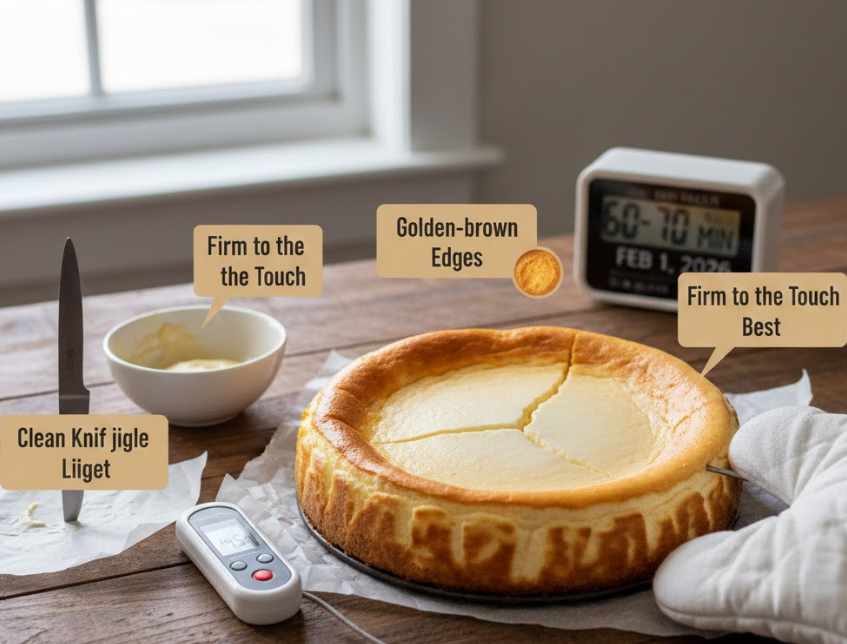
These indicators apply to nearly all baked cheesecakes regardless of recipe.
Reliable Baking Indicators
• The edges are set and lightly puffed.
Fully baked edges indicate proper heat penetration.
• The center remains slightly glossy.
A dry surface usually means overbaking.
• The top is pale, not browned.
Browning signals excessive heat.
• The cheesecake has risen slightly.
Gentle puffing means proteins have set.
• No wet batter is visible.
Surface moisture should look custard-like, not liquid.
• Aroma becomes rich but not eggy.
Egg smell indicates overheating.
Also Read This:- How to Make Sticky Rice: Ultimate Guide for Home Cooking
How to Tell When Cheesecake Is Done in the Oven (Visual Oven Test)
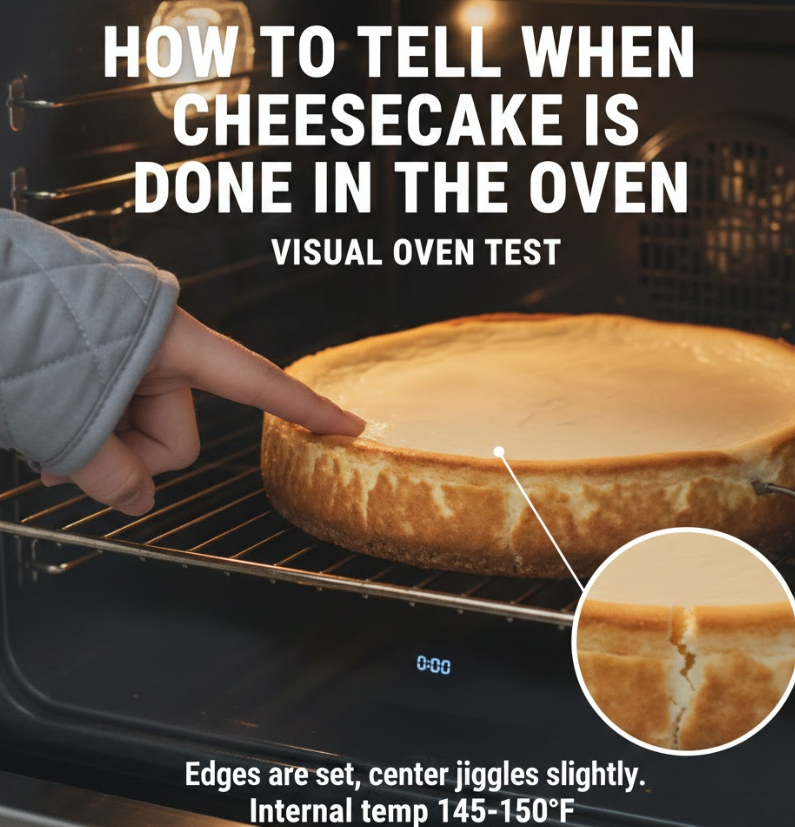
Observing cheesecake while it bakes provides critical doneness clues.
Oven-Based Doneness Signals
• The outer 2–3 inches are firm.
This ring acts as a stability anchor.
• The center moves independently.
A soft center jiggle is ideal.
• Steam release slows near completion.
Reduced surface moisture signals setting.
• Surface remains smooth and intact.
Early cracking means excess heat.
• Pan sides pull away slightly.
This shows structural cohesion.
• Cheesecake stops rising.
Peak rise indicates nearing doneness.
Also Read This:- How to Make Slime Without Activator: Ultimate Guide for Kids and Adults
How to Tell When Cheesecake Is Done in Oven Using the Jiggle Test
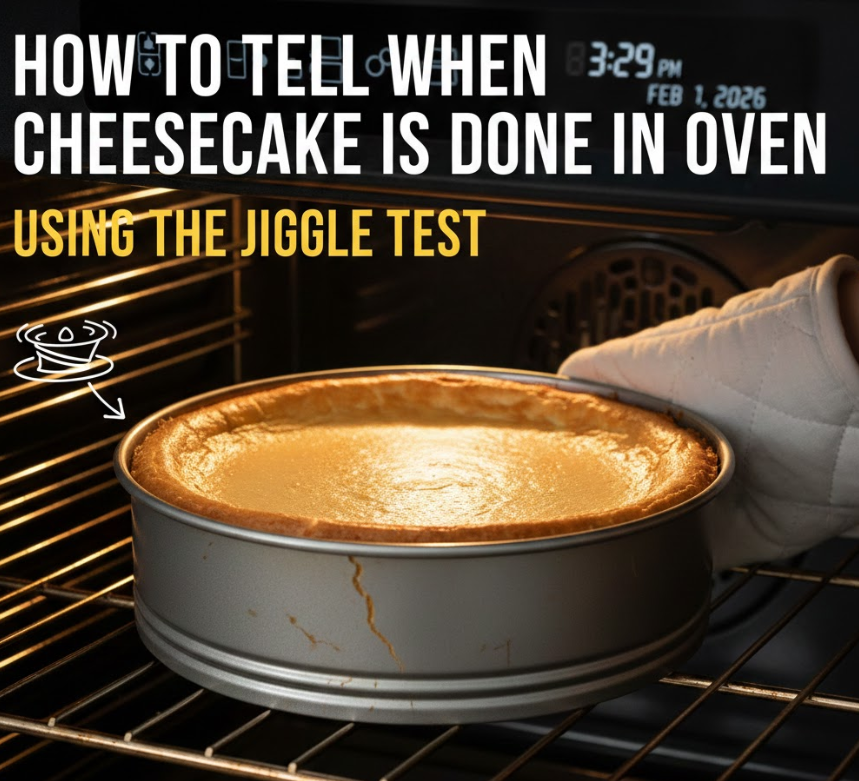
The jiggle test is the gold standard among professionals.
Mastering the Jiggle Test
• Gently shake the pan sideways.
Avoid sudden or forceful movement.
• The center should wobble like gelatin.
Liquid sloshing indicates underbaking.
• Edges should remain motionless.
Movement at edges means insufficient baking.
• Jiggle should be controlled, not loose.
Excessive motion means raw interior.
• The jiggle tightens during cooling.
Residual heat finishes cooking.
• Different pan sizes affect jiggle.
Thicker cheesecakes jiggle more initially.
Also Read This:- How to Cook Prime Rib: The Ultimate Guide for Juicy, Flavorful Results
How to Tell When Cheesecake Is Done Cooking (Internal Temperature Method)
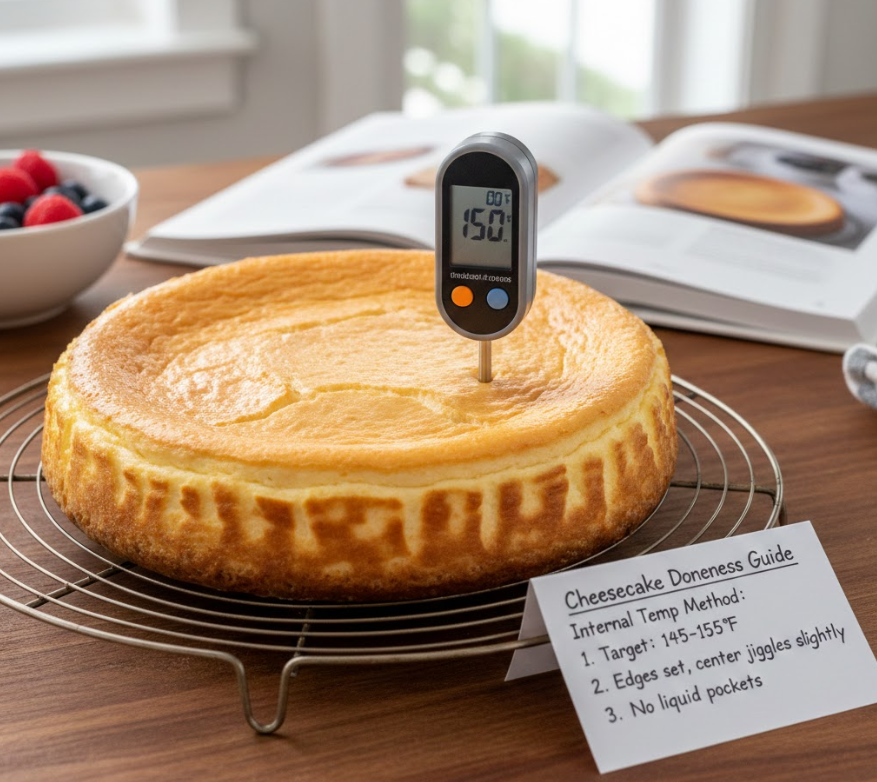
Temperature offers the most precise doneness confirmation.
Temperature-Based Doneness
• Ideal internal temperature is 150°F–155°F.
This range ensures safe egg coagulation.
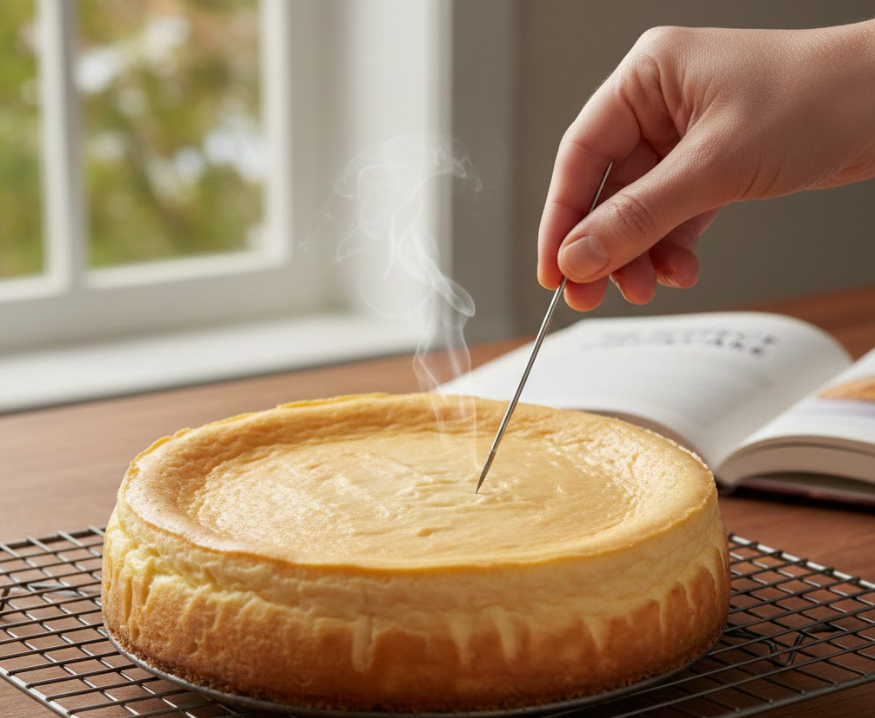
• Insert thermometer halfway to center.
Avoid touching the pan.
• Temperatures above 160°F cause overbaking.
Protein contraction begins rapidly.
• Temperature continues rising after removal.
Carryover heat adds 5–10°F.
• Digital instant-read thermometers work best.
They provide fast, accurate readings.
• Temperature testing prevents guesswork.
Especially useful for thick cheesecakes.
Also Read This:- How to Cook Jasmine Rice: The Ultimate Guide for Perfect, Fluffy Grains
How to Tell When Cheesecake Is Done Video Method (Visual Learning)
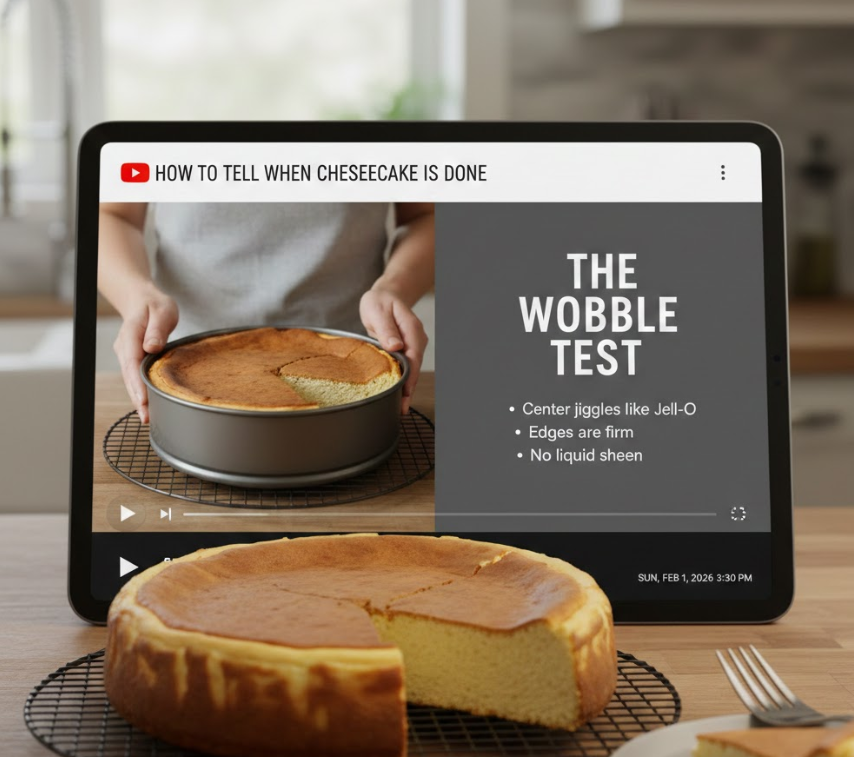
Many bakers rely on visual references from trusted video demonstrations.
Using Video Techniques Effectively
• Watch how the center jiggles on removal.
Videos show real-time texture movement.
• Observe edge firmness comparison.
Contrast helps train visual judgment.
• Learn timing differences by size.
Videos highlight pan depth effects.
• Study crack prevention techniques.
Proper doneness minimizes cracking.
• Pause and replay doneness moments.
Repetition builds confidence.
• Use videos from reputable bakers.
Prefer culinary schools or professionals.
Also Read This:- How to Make Netherite Armor: The Complete Minecraft Guide
Common Cheesecake Doneness Mistakes That Ruin Texture
Avoiding mistakes is just as important as knowing the signs.
Mistakes to Avoid
• Baking until the center is fully firm.
This guarantees overbaking.
• Using toothpicks like cake testing.
Cheesecake should never come out clean.
• Baking at high temperatures.
Excess heat causes cracking.
• Skipping water baths.
Uneven heat leads to false doneness cues.
• Opening the oven too frequently.
Temperature drops disrupt setting.
• Relying only on bake time.
Visual cues matter more.
Also Read This:- How to Make Heavy Cream: Ultimate Guide to Homemade and Substitutes
Cooling and Setting – The Final Stage of Cheesecake Doneness
Cooling is a continuation of baking.
Why Cooling Completes Doneness
• Residual heat finishes protein setting.
Structure develops gradually.
• Slow cooling prevents cracking.
Rapid temperature change causes stress.
• Refrigeration firms texture fully.
Cheesecake reaches peak consistency after chilling.
• Cutting early misrepresents doneness.
Warm cheesecake appears underbaked.
• Flavor matures during cooling.
Cream cheese notes deepen.
• Texture stabilizes over 4–6 hours.
Overnight chilling is ideal.
Also Read This:- How to Make Jello Shots: A Complete Guide
Professional Tips for Perfect Cheesecake Doneness Every Time
Expert strategies improve consistency.
Expert Baking Techniques
• Always use room-temperature ingredients.
Even mixing ensures even baking.
• Bake low and slow.
Gentle heat prevents curdling.
• Use a water bath consistently.
Moist heat stabilizes doneness.
• Turn off oven early and rest inside.
Gradual cooling improves texture.
• Calibrate your oven regularly.
Temperature accuracy matters.
• Practice observation over repetition.
Experience sharpens doneness instinct.
Conclusion – Mastering How to Tell When Cheesecake Is Done
Learning how to tell when cheesecake is done transforms baking from guesswork into confidence. Whether you rely on the jiggle test, internal temperature, oven observation, or video references, understanding how cheesecake behaves under heat is the key to flawless results.
A perfectly baked cheesecake is softly set, gently jiggly, and finished through cooling—not force. By applying the techniques in this guide, you can consistently produce creamy, smooth, crack-free cheesecakes worthy of professional bakeries.
FAQs: How to Tell When Cheesecake Is Done
Q1: Can cheesecake be slightly underbaked?
Yes. Slight underbaking is intentional and preferred.
Q2: Why does cheesecake crack after baking?
Overbaking and rapid cooling are the main causes.
Q3: Should cheesecake brown on top?
No. Browning usually means excessive heat.
Visit For More Information:- Supper Magazines