 Richard
TLDR: The most reliable warning signs of foundation problems are horizontal cracks in basement walls, doors, and windows that stick or no longer close properly, diagonal cracks from corners of openings, uneven floors, and gaps between walls and ceilings. Any of these warrants professional evaluation.
Foundation movement rarely announces itself at the foundation first. Instead, it appears through changes in the structure above, including wall cracks, doors that no longer close properly, uneven floors, and gaps forming where building components meet. These symptoms often indicate that the foundation is no longer supporting the structure uniformly.
The American Society of Home Inspectors reports that foundation issues are among the five most common deficiencies identified in home inspections, affecting properties across all ages and price points.
Early evaluation limits the scope and cost of any necessary repair. Homeowners who notice these signals and engage a Residential Structural Repair Denver CO engineer for assessment get an accurate picture of the severity before committing to any repair scope.
What Types of Foundation Cracks Are Serious?
Not all foundation cracks carry the same concern level. The pattern, direction, and width of the crack determine its significance.
Horizontal Cracks in Basement Walls
Horizontal cracks in poured concrete or block foundation walls are the most serious type. They indicate lateral soil pressure pushing the wall inward. This pressure comes from expansive soil, hydrostatic pressure from water, or frost heave in cold climates.
A horizontal crack that is widening, or that shows displacement where one side of the crack is offset from the other, indicates active movement. This is a structural failure pattern that requires engineering evaluation and repair, not monitoring.
Diagonal Cracks from Corners of Openings
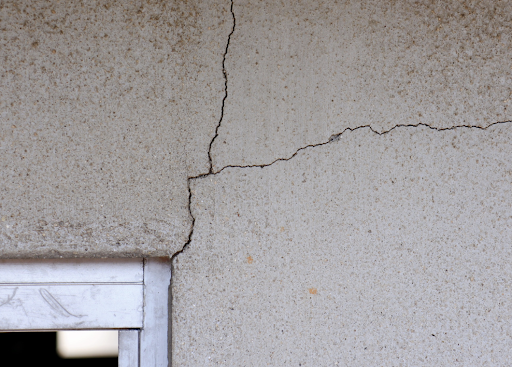
Diagonal cracks radiating from the corners of windows and doors in foundation walls indicate differential settlement, where one part of the foundation has moved downward relative to an adjacent section. The degree of settlement determines the urgency.
A diagonal crack that is hairline width, stable, and not associated with any door or window dysfunction is often a shrinkage crack from curing. The same crack that has grown since it appeared, or that affects the operation of the opening above it, indicates active movement.
Vertical Cracks
Vertical cracks in poured concrete foundations are common and frequently result from normal concrete curing shrinkage. A hairline vertical crack that is uniform in width from top to bottom and has been stable for years is a lower concern than other crack types.
A vertical crack that is wider at the top than the bottom, or that has water staining around it, indicating moisture intrusion, requires attention for waterproofing, even if the structural concern is limited.
What Above-Grade Signs Indicate Foundation Movement?
Doors and Windows That Stick or No Longer Latch
When the foundation moves, the door and window frames move with it. Frames that were square become racked, producing corners that are no longer at 90 degrees. Doors begin to stick in their frames, fail to latch, or develop a gap at one corner that was not there before.
This is one of the most reliable above-grade indicators of foundation movement because it is functional, not just visual. The homeowner experiences it daily without recognizing it as a structural signal.
Diagonal Cracks in Drywall at Opening Corners
The same differential settlement that produces diagonal cracks in foundation walls produces the identical crack pattern in drywall above doorways and window corners. A crack running at approximately 45 degrees from the corner of a door or window opening indicates that the framing around that opening has racked.
Patching these cracks without identifying the underlying cause produces cracks that reappear within one to two seasons.
Uneven or Sloping Floors
A marble rolled across a floor should travel in a straight line. A floor with a measurable slope or with localized soft spots indicates that the framing below is either settling unevenly or has experienced moisture damage to supporting members.
The International Building Code permits a floor deflection of L/360, where L is the span length. Deflections beyond this threshold are structurally notable. A homeowner can perform a rough assessment with a carpenter’s level across multiple directions in a room.
Gaps Between Walls and Ceilings or Floors
Separation between the top of a wall and the ceiling above it, or between the bottom of a wall and the floor below, indicates vertical movement in the structure. The wall and the adjacent structural elements have moved relative to each other.
This pattern appears most commonly where an addition joins the original structure, or where a floor system is experiencing settlement independent of the walls.
What Causes Foundation Problems?
Soil Movement
Expansive clay soils absorb water and swell, then dry and shrink with seasonal moisture changes. This cycle exerts lateral and vertical pressure on foundation walls and footings that produces the movement patterns described above.
Colorado’s Front Range has significant clay soil content in many areas. Foundation movement in this region is frequently driven by soil expansion and contraction rather than by structural inadequacy.
Poor Drainage
Water that collects against the foundation rather than draining away from it increases hydrostatic pressure on the wall. Extended periods of moisture contact also saturate expansive soils adjacent to the foundation, amplifying their movement cycle.
Downspouts that terminate against the foundation, flat or negative grading that directs surface water toward the house, and window wells without drainage all contribute to this condition.
Tree Root Proximity
Large trees planted close to the foundation draw moisture from the soil in a wide radius. In clay soil, this extraction causes soil shrinkage on one side of the foundation while the opposite side remains stable, producing differential settlement.
The visible symptom is diagonal cracking patterns that are more pronounced on the side of the building closest to the tree.
When Do Foundation Problems Require Immediate Action?
The following conditions warrant a same-week professional evaluation rather than a scheduled assessment:
- Any horizontal crack in a basement wall that is visibly wider than it was previously
- Wall displacement, where the foundation wall has visibly moved inward from its original position
- A floor area that has developed a soft spot or collapse suddenly rather than gradually
- Any crack pattern associated with rapid water intrusion during rain events
- Visible separation of a structural component from its bearing point
These conditions can progress quickly. An accurate engineering assessment at this stage defines the scope of necessary repair and prevents the scope from expanding through delay.
Key Takeaways
- Horizontal cracks in basement walls are the most serious foundation crack type and always warrant professional evaluation
- Diagonal cracks from door and window corners, both in drywall and in foundation walls, indicate differential settlement
- Sticking doors and windows that previously operated correctly are a functional signal of foundation movement, not just an inconvenience
- Soil type, drainage, and tree proximity are the most common causes of foundation problems in Colorado’s Front Range
- Monitoring stable cracks is appropriate; cracks that are widening, displaced, or accompanied by water require immediate assessment
- The cost difference between early intervention and delayed repair is substantial: foundation repairs addressed early cost a fraction of those addressed after significant structural compromise