 Admin
AdminPorcelain tiles belong firmly to the latter category. Appreciated for their durability, versatility, and refined appearance, they have become a reliable solution for both residential and commercial projects. Whether used in private homes or high-traffic public spaces, they combine practical performance with design flexibility, making them a material that continues to adapt to evolving lifestyles and architectural trends.
A surface designed for everyday performance
One of the main reasons porcelain tiles remain so widely specified is their ability to withstand the demands of daily use. Manufactured through a high-temperature firing process, they create a dense, compact surface that offers excellent resistance to wear, scratches, stains, and moisture. These characteristics help preserve both their functionality and appearance over time, even in environments exposed to frequent use.
Their low porosity also makes porcelain tiles easy to clean and maintain. Unlike materials that require regular sealing or specialized treatments, they generally need only routine cleaning to retain their original look. This practical advantage makes them well suited to busy households as well as commercial settings where efficiency and long-term reliability are essential.
Versatility across different design contexts
Beyond their technical qualities, porcelain tiles offer remarkable design versatility. Available in a wide range of sizes, finishes, textures, and colors, they can complement virtually any interior style, from minimalist and contemporary spaces to more classic or industrial-inspired environments.
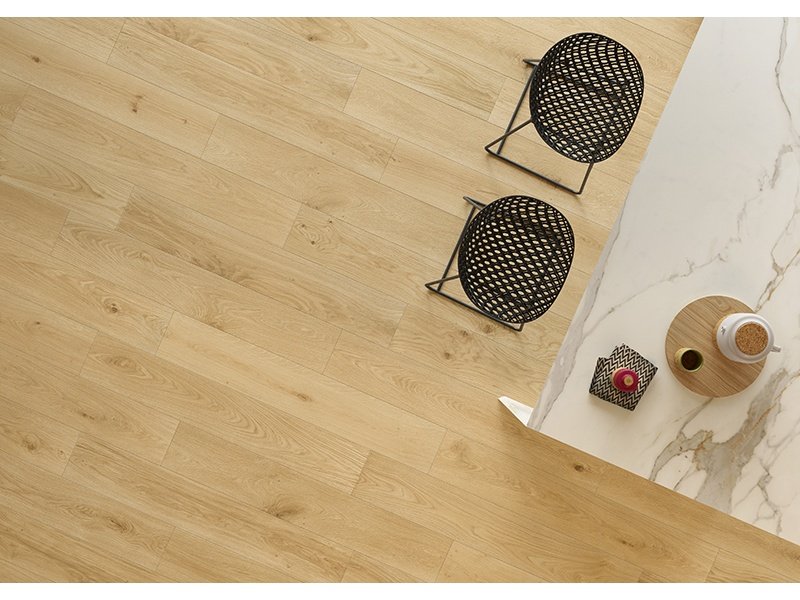
Modern manufacturing technologies have also expanded the variety of aesthetic options available. Stone, marble, wood, and concrete-look porcelain tiles faithfully recreate the character of natural materials while delivering the practical benefits associated with porcelain. This allows designers to achieve a desired visual effect without sacrificing durability or ease of maintenance.
Their versatility extends well beyond individual rooms. Porcelain tiles can be used throughout living areas, kitchens, bathrooms, and outdoor spaces to create visual continuity across an entire property. The same flexibility makes them equally suitable for commercial environments, where a consistent design language often contributes to a more recognizable identity.
A material that retains its value over time
The lasting appeal of porcelain tiles is closely tied to their ability to remain relevant long after installation. Rather than following short-lived design trends, they offer a balanced combination of aesthetics and performance that continues to meet the needs of changing spaces.
Because they are designed to resist everyday wear, porcelain tiles help preserve the original appearance of floors and walls with relatively little maintenance. Their durability can also reduce the need for repairs or premature replacement, making them a practical long-term solution for projects where reliability is an important consideration.
Supporting spaces that evolve over time
The way people live, work, and interact with buildings continues to evolve, and the materials selected for those environments must be able to evolve alongside them. Flexibility, reliability, and timeless aesthetics have become increasingly important as residential and commercial spaces are expected to serve multiple functions and adapt to changing needs.
Porcelain tiles continue to meet these expectations by offering a solution that balances technical performance with broad design possibilities. Rather than being defined by temporary trends, their enduring appeal lies in their ability to remain relevant across different architectural styles, project types, and everyday requirements.
Ceramiche Keope: advancing contemporary porcelain through design and expertise
Since 1995, Ceramiche Keope has pursued a clear vision: to transform porcelain stoneware into a material capable of combining quality, innovation, and lasting aesthetic value. As a member of the Concorde Group, the company has grown into an internationally recognized manufacturer, supporting architects and designers with ceramic collections developed to meet the demands of contemporary residential, commercial, and public projects.
Continuous investment in research, advanced production technologies, and manufacturing expertise enables Ceramiche Keope to deliver surfaces that balance creative freedom with long-term technical performance.
Porcelain stoneware remains at the core of this approach. Produced from carefully selected natural raw materials and fired at extremely high temperatures, it combines very low water absorption with outstanding resistance to wear, mechanical stress, chemicals, and changing environmental conditions. These qualities make it a reliable solution for projects where durability, ease of maintenance, and design consistency are equally important.
To support a wide variety of architectural applications, Ceramiche Keope offers collections in numerous sizes, thicknesses, and aesthetic interpretations. From compact formats for detailed compositions to large slabs that emphasize visual continuity, every solution is conceived to provide designers with maximum flexibility.
This versatility extends to a broad selection of surface finishes, allowing each project to achieve its own distinctive character. ULTRAsilky introduces an extra-smooth, velvety satin texture that combines refined elegance with enhanced slip resistance for interior wet areas, while ULTRAmatt delivers a deep, extra-matt appearance with a soft tactile feel, combining effortless maintenance with R10 A+B slip resistance for both residential and commercial environments.
Innovation at Ceramiche Keope is closely linked to environmental responsibility. The company operates a closed-cycle manufacturing system that fully reuses production water, recovers fired ceramic waste and reintegrates raw material residues into the manufacturing process. Around 75% of the energy required for production is generated internally, while the remaining share comes exclusively from certified renewable energy sources, supporting a more responsible industrial model.
This long-term commitment is reflected in internationally recognized certifications, including ISO 17889, WELL Building Standard V2, and Declare, which attest to the company’s responsible manufacturing practices and its contribution to healthier, more transparent, and more sustainable built environments.
Through this combination of design expertise, technological innovation, and environmental responsibility, Ceramiche Keope continues to advance porcelain stoneware as a material for contemporary architecture and interior design.