 Richard
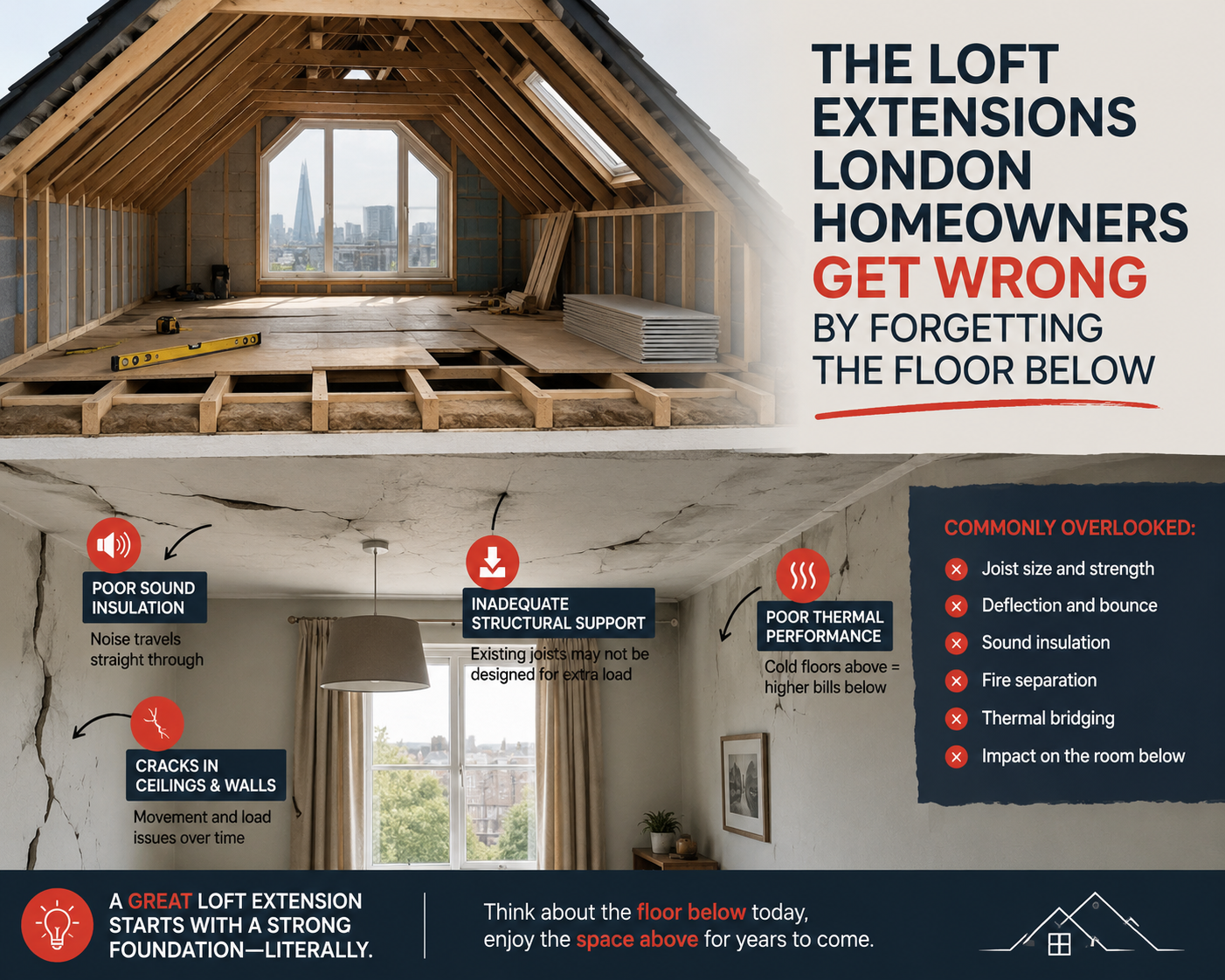
I was obsessed with the loft itself. The new bedroom, the ensuite, the velux windows framing the sky. I had it all pictured. What I never once thought about was the floor below, until the architect explained that my dream loft would cost me a bedroom downstairs. That was the moment I understood what makes loft projects trickier than they look, and why the architects london homeowners rely on earn their fee.
The staircase has to come from somewhere. That space comes out of the floor beneath the loft. I had spent weeks designing the room at the top and zero seconds thinking about where the stairs would land or what they would eat into below.
My first instinct, like most peoples, was to put the new stairs directly above the existing ones. Simple, neat, space efficient. The architect looked at my layout and showed me why, in my particular house, that would have ruined the bedroom underneath.
Why the Loft Is the Easy Part
Everyone fixates on the loft room. The light, the layout, the ensuite. That bit is genuinely the fun part and the easy part to imagine.
The hard part sits one floor down. The staircase rising into the loft has to start somewhere on the first floor, and wherever it goes, it takes space from what is already there.
This is the thing nobody pictures when they dream of a loft. You are not just adding a room at the top. You are rearranging the floor below to make room for the way up. Get that wrong and you gain a bedroom upstairs while losing one beneath.
The Stairs Above Stairs Problem
The obvious solution is to stack the new stairs directly over the existing flight. It sounds efficient and often it is the right answer. But not always, and not in my house.
In my layout, putting the loft stairs above the existing ones meant the top of the new flight emerged right under the lowest part of the roof. Almost no headroom where I would step off into the loft. It would have failed building regulations and felt horrible to use.
The architect explained that the stairs have to arrive in a part of the loft with enough height to stand. Ours didn’t line up that way. The neat stacked solution was actually the wrong one for our roof.
How the Architect Solved It
Instead of stacking the stairs, she repositioned them to rise in a slightly different spot, where they arrived under the ridge with full headroom. It meant borrowing a small amount of space from a first floor room, but far less than a clumsy solution would have taken.
She angled the flight and used the landing cleverly so the loss downstairs was minimal. One bedroom shrank by a fraction rather than being wrecked. The loft above gained proper, usable, full height space.
It was a puzzle solved in three dimensions, balancing headroom in the loft against space on the floor below. Exactly the kind of thing you cant see until someone who does it regularly draws it out.
Why Headroom Decides Everything
The lesson that stuck was about headroom over the stairs. Regulations need a minimum clearance, and under a sloping roof that is surprisingly hard to achieve.
If the stairs emerge too close to the eaves, you bang your head and the layout fails. The stairs have to land where the roof is tall enough, and that single requirement drives the whole design, both up in the loft and down below.
Well planned loft conversions treat the staircase as the starting point, not an afterthought. Mine did once the architect took over, and the difference between her solution and my naive stacked one was an entire usable bedroom.
The Light Problem I Hadn’t Considered Either
There was a bonus issue the architect caught. A solid staircase rising into the loft can block daylight reaching the floor below, leaving the landing dark.
She used an open design and positioned a rooflight above the stairs so light fell down through them. The landing stayed bright instead of becoming a gloomy tunnel.
Again, none of this had crossed my mind. I was busy choosing loft flooring while the real design work was happening on the staircase and the floor it touched. The expert saw the whole picture, not just the pretty bit.
What to Think About Before a Loft Project
Before you fall in love with the loft room, think about where the stairs will go and what they take from the floor below. That decision shapes the whole project more than the loft layout does.
Ask your architect early about headroom over the stairs and where they will land. If the easy stacked solution doesn’t give you height, a repositioned stair often saves a bedroom downstairs.
Five to seven months from that floor below revelation to a finished loft that cost me almost no space underneath. I came in dreaming about the room at the top. The architect taught me the whole thing is won or lost on the staircase below. Plan the way up before you plan the room.