 Richard
As data centers continue to expand to meet the demands of cloud computing, artificial intelligence, and high-performance computing, energy consumption has become a critical concern for operators. Power-hungry servers, cooling systems, and network infrastructure contribute significantly to operational costs and environmental impact. In this context, network interconnect technologies such as 200G Active Optical Cables (AOCs) are playing an increasingly important role in enhancing energy efficiency while supporting high-bandwidth data transfer requirements.
Data centers rely heavily on optical interconnects to connect servers, switches, and storage systems. Traditional copper-based direct-attach cables (DACs) and standard optical transceivers have been widely used for high-speed connections. However, as data rates increase from 100G to 200G and beyond, these solutions face limitations in terms of power consumption, signal integrity, and distance capabilities. 200G AOCs provide a compelling alternative, combining high-speed optical transmission with low power usage and compact form factors suitable for dense network deployments.
Understanding 200G Active Optical Cables
What Are Active Optical Cables?
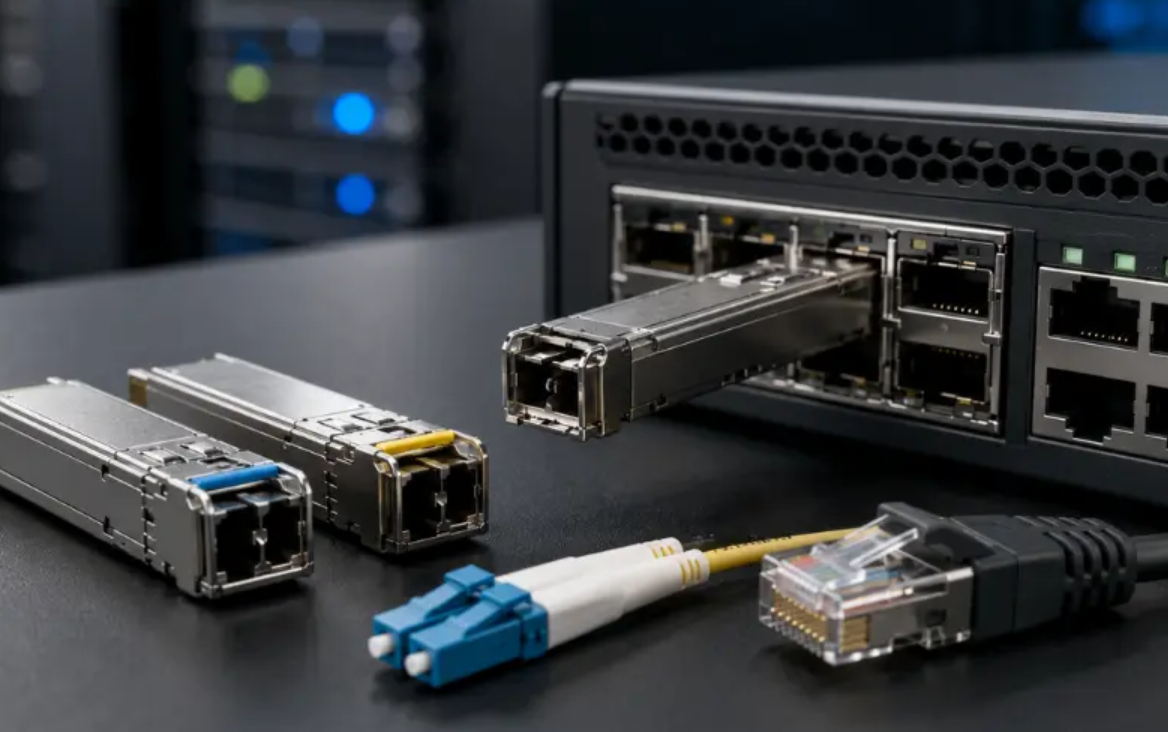
Active Optical Cables are pre-terminated optical fiber assemblies with integrated optical transceivers on both ends. Unlike passive cables, which rely solely on the electrical-to-optical conversion of separate transceivers, AOCs handle signal conversion within the cable itself. This design allows for longer transmission distances compared to copper cables while maintaining low latency and high data integrity.
200G AOCs are specifically designed to support 200 gigabit-per-second data rates, often using PAM4 modulation and multi-lane optical channels. These cables are commonly deployed in short-range interconnects, typically ranging from 10 meters up to 100 meters, making them ideal for intra-rack and inter-rack connections in data centers.
How 200G AOCs Improve Network Efficiency
One of the key advantages of 200G AOCs is their energy efficiency. By integrating optical transceivers directly into the cable assembly, AOCs reduce the need for separate modules in network switches and servers, which in turn lowers power consumption. This efficiency becomes especially important in large-scale deployments where thousands of connections operate simultaneously, and even small power savings per cable can translate into significant reductions in total energy usage.
Furthermore, AOCs reduce signal loss and minimize the need for additional amplification or repeaters, further lowering operational energy costs. The combination of high-speed data transmission, compact design, and low power draw makes 200G AOCs a practical solution for data centers seeking to optimize both performance and energy efficiency.
Energy Challenges in Modern Data Centers
Rising Power Consumption
Modern data centers are becoming increasingly dense, housing thousands of servers, storage devices, and high-speed switches within limited rack space. Each component consumes power, and collectively, networking infrastructure can account for a substantial portion of total energy usage. As data traffic grows exponentially due to AI, machine learning, and cloud applications, network energy consumption is becoming a critical factor in overall operational costs.
Traditional interconnect solutions, while reliable, may not scale efficiently to meet these demands. Copper cables, for instance, generate heat at higher data rates, requiring additional cooling and contributing to power consumption. Optical transceivers in separate modules also add to the energy footprint, especially when deployed in high-density switch environments.
Cooling and Thermal Management
The heat generated by networking equipment is another significant concern. Excessive heat not only increases the risk of hardware failure but also requires additional cooling resources, further elevating energy costs. 200G AOCs, with their low-power design and efficient thermal characteristics, help mitigate this issue. By reducing heat generation at the source, AOCs minimize the burden on cooling systems, allowing data centers to operate more efficiently and sustainably.
Advantages of 200G AOCs for Energy Efficiency
Low Power Consumption
One of the primary benefits of 200G active cable is its low power usage compared to traditional optical solutions. By integrating optical transceivers within the cable, AOCs eliminate the need for multiple high-power modules and reduce energy loss across connections. This efficiency is particularly valuable in dense networking environments where hundreds or thousands of links operate simultaneously.
Compact Form Factor
AOCs are designed for high-density deployment, allowing more cables to fit within a rack while maintaining optimal airflow. The compact design helps reduce physical clutter, which in turn improves airflow and cooling efficiency. Better airflow contributes to lower overall energy consumption in the data center by minimizing the need for additional cooling resources.
Reduced Latency and Signal Loss
Energy efficiency in a data center is not just about reducing power draw; it also involves minimizing operational overhead. 200G AOCs support high-bandwidth, low-latency transmission, reducing the need for error correction or signal amplification that consumes additional energy. By maintaining signal integrity over short to medium distances, AOCs ensure that network traffic flows efficiently, allowing computing resources to operate at peak performance without unnecessary energy expenditure.
Applications of 200G AOCs
Intra-Rack and Inter-Rack Connectivity
200G AOCs are ideal for connecting servers within the same rack or across adjacent racks. They support high-speed communication between compute nodes and storage systems, which is critical for workloads such as AI training, high-performance computing simulations, and cloud services. By providing reliable, low-power connectivity, AOCs help data centers maintain both high performance and energy efficiency.
High-Density Networking in AI and HPC Clusters
AI clusters and HPC systems require dense network interconnects to facilitate parallel processing and distributed computation. 200G AOCs offer the speed, reliability, and low power consumption necessary to support these demanding environments. Their ability to handle large volumes of data with minimal energy overhead makes them a preferred choice for modern, sustainable computing infrastructures.
Future Outlook
As data center operators continue to prioritize sustainability, energy-efficient networking technologies like 200G AOCs will become increasingly important. The demand for higher data rates, denser deployments, and lower operational costs will drive adoption of optical interconnects that optimize both performance and power efficiency. In addition, AOCs are well-positioned to support future upgrades to 400G and higher-speed networks, offering a scalable and energy-conscious pathway for next-generation data centers.
Conclusion
Energy efficiency is a critical factor in the design and operation of modern data centers. 200G Active Optical Cables combine high-speed connectivity, low power consumption, and compact form factors, making them an essential tool for data center operators looking to optimize energy usage. By reducing power draw, improving thermal management, and maintaining signal integrity, 200G AOCs contribute to sustainable, high-performance networking that can meet the growing demands of AI, HPC, and cloud computing environments. As data centers continue to scale, the role of energy-efficient interconnects like 200G AOCs will only become more vital in building sustainable, high-speed computing infrastructures.